
Trico Time: Matching the Spinner Fall on South Platte Tailwaters
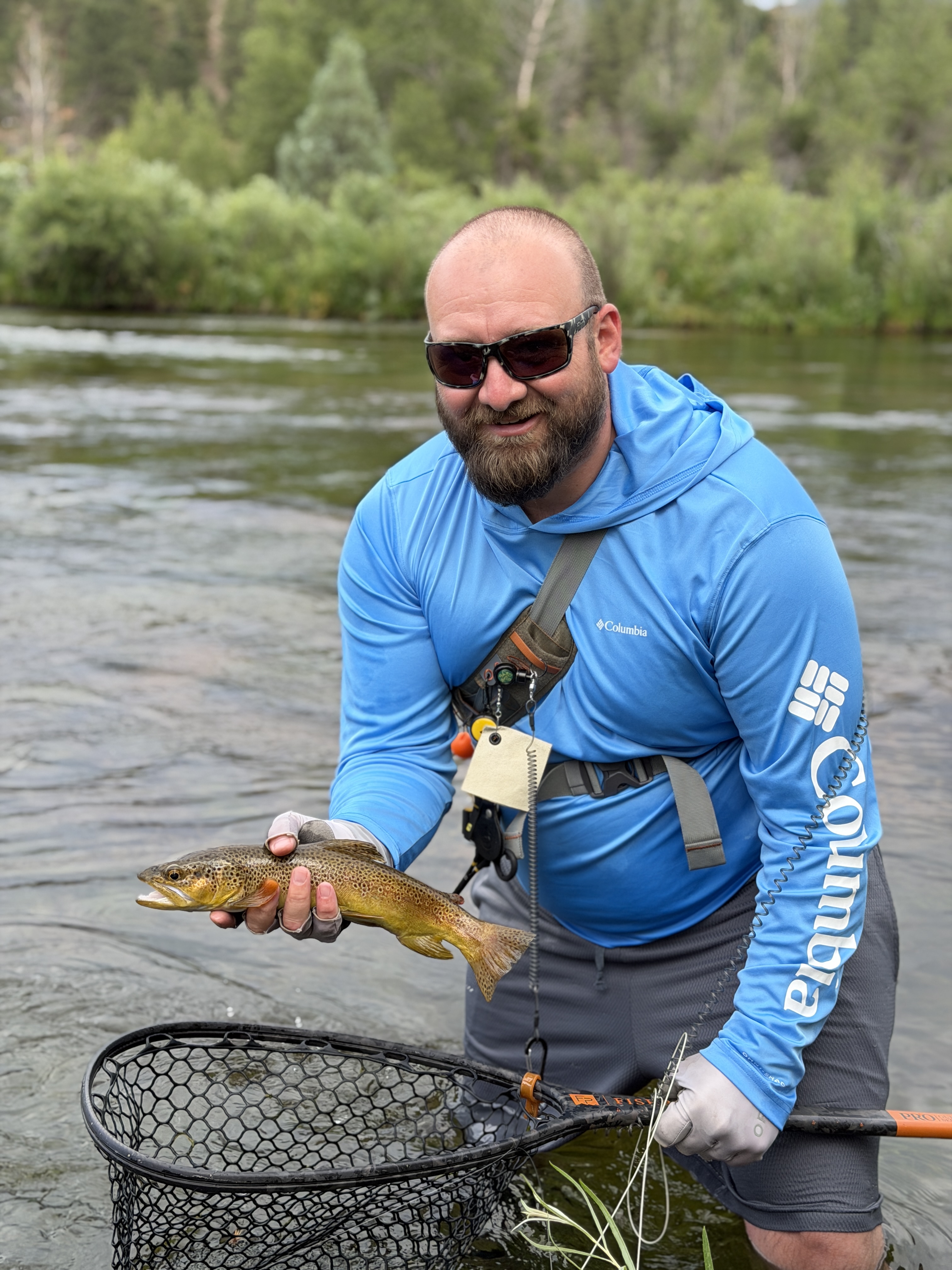
If you've fished Deckers, Cheesman Canyon, the Dream Stream, or Eleven Mile at any point in the last few weeks, you already know this: trico season is here, and it isn't just getting started. It's been the defining hatch on these tailwaters for weeks now, and it's still going strong. If you've been waiting for a "the hatch is about to turn on" post, this isn't it. It's already on, and it's worth planning your week around.
Quick reference
● Where: Deckers, Cheesman Canyon, the Dream Stream, Eleven Mile Canyon
● When: first light through mid-morning, most days winding down before 10 a.m.
● Sizes: #20-24
● Go-to flies: Gray RS2 (#20-24) subsurface or in the surface film, Zebra Midge, or Rainbow Warrior before the fall gets going; a #20-24 spent-wing trico spinner once it does
● Water temperature rule: stop fishing at 67 degrees, no exceptions
What's happening on the water right now
Flows on the upper South Platte tailwaters have settled into a typical late-summer pattern. Cheesman is releasing right around 147 cfs, with Deckers running close behind in the 140s. That's low enough to make fish spooky and selective, which is exactly the kind of water a trico spinner fall rewards. Water stays cool coming straight off the bottom of Cheesman Reservoir, but afternoons further downstream from the spillway can still push temperatures into the danger zone for trout. Check the live flow and temperature on our South Platte River Report page before you head out, and if you see water pushing 67 degrees, it's time to go home or to an alpine lake, not switch flies.
Hatches through the rest of the day are sparse right now. Caddis and PMDs are still mixed in, but tricos are carrying the water, and the fish know it.
How the hatch actually plays out
Tricos are a small mayfly, and their whole adult life cycle from dun to spent spinner happens fast and early. Duns start emerging around first light, mate in swarms above the river shortly after, and the spinner fall, the moment thousands of spent, egg-laying tricos drop onto the water at once, typically follows through mid-morning. In mid-August heat, that window compresses and moves earlier: expect the best of it before 10 a.m., with the trico bite going quiet on Deckers well before midday most mornings.
That makes this a first-light game. Get on the water at or before dawn, fish the dun and emerger stage as it builds, and treat the spinner fall as the main event, not an afterthought.
One honest note: tricos don't perform identically every single day. A cool front, a shift in barometric pressure, or a heavy overcast morning can suppress or delay activity even in the middle of a strong hatch cycle. If one morning is quieter than the last, that's normal trico behavior, not a sign the hatch is done.
What to tie on
Subsurface, before the spinner fall gets going, a size 20-24 Gray RS2 is the right searching pattern, which is exactly why it anchors our Tailwater Dozen. Zebra Midges and a Rainbow Warrior round out a box built for these conditions and keep you covered between trico windows.
Once the spinners hit the water, size the artificial to what's actually on the water, usually a #20-24 spent-wing spinner. We carry a dedicated trico spinner pattern in the shop. If you want spinners tied to the exact size, color, and profile coming off the water on your stretch this week, that's exactly what a custom order is for. Reach out and we'll tie it to match what you're seeing.
This week's window
Monday and Tuesday morning look like the pick of the week: clear skies, cool overnight lows in the mid-40s, and a mostly sunny start before the heat builds. That's a textbook setup for a strong, well-timed spinner fall. Wednesday brings a real change, with afternoon storms likely and a good chance of thunderstorms rolling in by early afternoon. Expect a similar afternoon-storm pattern into the back half of the week. Fish the mornings, watch the sky, and be off the water well before it turns too hot.
Respect the water
This is a low-water, high-pressure summer for the South Platte, and this stretch is carrying more fishing pressure than usual because of it. Handle every fish gently, keep it in the water for photos, and get off the water once temperatures climb, even if the fishing is still good. A fishery this good only stays this good if we all treat it that way.
We'll be at the vise this week tying the exact trico spinner pattern this hatch calls for, sizes and all. Watch for it, and if you want one built to match what you're seeing on your home water, send us a custom order.
Comments